Wednesday, 13 July 2016

Thomas and Harriet's Children (4): Thomas John Edgar

After three grim years of war it seemed as if the British at last had something to celebrate.

On November 21, 1917 people in some towns and villages heard a sound that had become unfamiliar: the enthusiastic ringing of church bells. Soon other churches joined in. On the twenty-second an all female team rung at the parish church at Dorking, and the bells of St. Paul's, silent for years, pealed out in a victorious carillon at noon on the twenty-third. They were rung for half an hour at Stondon Massey, just ten miles away from where Thomas and Harriet Edgar were living in Theydon Garnon- and perhaps they were rung at All Saints, the village church where Thomas was a warden.[1]

They were celebrating the successful British attack of November 20, where an innovative approach - combining the power of over 300 tanks, with artillery, aircraft and infantry - had broken through the German lines close to the French town of Cambrai, a victory which seemed to promise a speedy end to the hideous bloodshed symbolised by the battle of the Somme (July-November 1916) and Passchendaele (July-November 1917).


Shrouds of the Somme: a Commemoration of those who died on the first Day of the Battle of the Somme - Exeter, July 1, 20016

Sadly all was not as it seemed. On November 21, even as the bells were starting to ring, half of those tanks had either been put out of action or developed mechanical faults.


Captured British Tank at Cambrai: By Bundesarchiv, Bild 183-S12137 / CC-BY-SA 3.0, CC BY-SA 3.0 de, https://commons.wikimedia.org/w/index.php?curid=5369315

The British assault faltered, the troops just creeping forward until they were forced to dig in and try to hold on to their gains. On November 30 a massive German counter-attack, led by Prince Rupprecht of the Rhine, soon took the situation back to more or less the same as before the British attack.

And one of the British soldiers to die on the first day of that counter-attack was Thomas John Edgar, aged 23.

Thomas was born on April 2 or April 17 (sources differ), 1894 at Gazeley, in between Newmarket and Bury St. Edmunds.


By Uksignpix - Own work, CC BY-SA 3.0, https://commons.wikimedia.org/w/index.php?curid=10405536

A record on Find My Past claims his parents were living in that area and that his father was a bailiff. Although I have no documents unconnected with Thomas John to support this, the fact that their youngest son was baptised in All Saints, the Gazeley Church, on May 13 certainly suggests Thomas and Harriet were living there, not just visiting friends.[2]

Gazeley - Church of All Saints.jpg

All Saints Church, Gazeley: 
By Bob Jones, CC BY-SA 2.0, https://commons.wikimedia.org/w/index.php?curid=6572896

In the 1901 Census Thomas John is recorded living at their next home in Stapleford Abbots as the youngest child in the family.

Map from Gazeley, UK to Stapleford Abbotts Golf Club, Horsemanside, Tysea Hill, Stapleford Abbotts, Romford RM4 1JU, United Kingdom

In 1911 there's only him and Wilfred left at home -  and 'home' is now a farm in Ongar (Essex) where both his parents are servants. He's a shop assistant.

Map from Chipping Ongar, UK to Stapleford Abbotts Golf Club, Horsemanside, Tysea Hill, Stapleford Abbotts, Romford RM4 1JU, United Kingdom

I have not yet been able to establish when Thomas joined the Essex Regiment (First Battalion, Service Number No. 18211). It's interesting that he enlisted from Windsor but gave his place of residence as Epping (presumably he was living with his parents at Theydon Garnon, just outside Epping itself). He was almost certainly staying with his brother Herbert and his wife Alice who moved there sometime after Herbert left the army for the reserves in June 1914.


By Unknown (artist); E French and Son, The Westbury Press, Brentwood (printer); Essex Regiment (publisher/sponsor) - This is photograph Art.IWM PST 5972 from the collections of the Imperial War Museums., Public Domain, https://commons.wikimedia.org/w/index.php?curid=20450095

The First Battalion of the Essex Regiment saw service in some of the worst fighting of the war. They were at Gallipoli, a failed attempt to knock Turkey - a German ally - out of the reckoning. After further action in this doomed campaign, they formed the rearguard in the evacuation from Sulva Bay. 883 men had arrived in Turkey and nine months later 375 left.[3]

After a short time in Egypt, the Battalion was sent to France and took part in the first and bloodiest day of the Somme - July 1, 1916.[4] They were taken into reserve on November 18, but continued to fight in northern France during the next year.

Wilfred 'Bay' Edgar wrote that Thomas had fought at Gallipoli, but until I have found the date of his enlistment I can't validate this claim. Nor do I know if he fought on the Somme. If I establish these things, I'll update this post.

But we do know one battle he fought in because it cost him his life.

Although I have not found any letters Thomas wrote from France, it is possible to get an idea of his experiences in the last days of his life from his Battalion's War Diary. Other sources give slightly different timings and details,[5] but, to keep matters simple, I've followed the War Diary except where useful clarification can be achieved by drawing on other accounts. Readers unfamiliar with military organisation might like to remember that a Battalion (in Thomas's case the First) is part of a Regiment (the Essex), and also part of a multi-regimental Brigade (the 88th) while a number of Brigades make up a Division (the 29th).

Throughout September 1917 Thomas and the rest of the First Essex were engaged in intensive training for the forthcoming battle to re-take Cambrai from the Germans - relieved only on the 18th when a drumming competition was held.[6] In mid-November the orders for the Cambrai campaign were issued and they spent three days non-stop moving to the attack area. [7]

On November 19 the Essex men were kept in huts at Sorel le Grand to stop the Germans guessing something was afoot. They were probably roused at midnight and given a hot meal; they were under arms by 1 a.m.[8] The day was going to be long and exhausting as well as dangerous.

They marched to an assembly point west of the village of Gouzeaucourt arriving at 4.40 a.m.

Map from Sorel, France to Gouzeaucourt, France

That was a trudge of  about 7 miles, and their objectives for the day were another four miles distant.[9] While Thomas and the men of the 29th. Division waited, other divisions were preparing to march forward behind a mass of about 300  tanks - the first time they'd been used in such numbers - all the more likely to be effective as the German army didn't have any tanks at all at this time.

The plan was for these first divisions to break through the first two German trench systems of the Hindenburg Line. Then it would be Thomas's turn.  His 88th Brigade would march forward as part of the 29th Division with the Essex men leading in the centre, soldiers from the Worcestershire Regiment to their right, and Canadians from the Newfoundland Regiment to the left.[10] The hope was that, the way made clear by the original assault, they could push on across the St Quentin Canal, seizing the crossing places of Marcoing and Masnieres. Then they in their turn would be followed by the cavalry who would attack the important German supply centre of Cambrai.

Map from Gouzeaucourt, France to Marcoing, France

Soon after 6 a.m - different sources give 6.10, 6.20 and 6.30 as 'zero hour'[11] [12] - as the first light was starting to penetrate the November mists, the attack began. About 300 tanks began to rumble forward, three divisions of infantry following, [13] while waves of planes flew over the German lines -on of their aims was to disguise the sound of the tanks - and the British artillery pounded the German lines.

At 8.45, with the attack progressing well, Thomas and his fellow Essex men moved into their positions as the advance guard of the 88th Brigade. They were ready by 9.20 and at 11 a.m. the bugle gave them the signal to advance.

The Essex marched forward behind four tanks,one of which eventually broke down, while the other three were taken out by field guns. But the men walked on, northwards up the Vacquerie Valley, capturing a German gun battery and taking 70 prisoners.[14] By 12 noon they held the first line of German trenches and they'd captured a strong point beyond the support trench. A lieutenant was wounded by 'a treacherous shot' while accepting the surrender of some German soldiers.

Soon they were at the village of Masnières, co-operating with the Worcestershires to force the Germans out of a suburb in the south.


Battle lines showing the progressions of the Battle of Cambrai. Masnières is in the upper centre of the right side of the map. (Wikipedia)


At 1 p.m. they reached the Canal and it was here that things started to go wrong - to make matters worse by mid afternoon a 'persistent drizzle' had set in.[15] The Germans had destroyed one bridge and prepared another for destruction and it collapsed under a tank from one of the divisions that had gone forward before Thomas's. His battalion couldn't now advance and came under heavy machine gun and rifle fire from houses on the northern side of the canal. For the rest of the afternoon the men tried everything to get across, but to no avail, so they decided to organise the defence of their side of the canal. Mopping up operations continued successfully all night, but all along the new frontline the British officers and men were too tired to press home the attack when the next day dawned.

The British and Canadians had won about 6 kilometres of ground in the day's fighting.

The next two days saw little progress and November 23/24 saw Thomas's Battalion in billets and dug-outs in the small town of Marcoing. Those in the houses seem to have been sheltering in cellars, but on the afternoon of the 24th shelling became so heavy that the whole battalion was moved into one big dug out.

After three days of work on the trenches, the whole 88th. Brigade were allowed to rest in Marcoing on the 29th., another day of heavy shelling.

The last day of Thomas's life, November 30, dawned bright and fine.[16] It began with a heavy German bombardment of gas shells starting at 7 a.m.  But he probably didn't sleep much before that, as it seems other areas came under bombardment from 2 a.m. and it was clear that a German assault was being prepared.[17]


The German Counter-attack: By Schlacht_von_Cambrai_-_Truppen_D-Angriff.png: W.wolnyderivative work: Uv1234 (talk) - Schlacht_von_Cambrai_-_Truppen_D-Angriff.png, CC BY 2.5, https://commons.wikimedia.org/w/index.php?curid=6747697

At about 8.30 it came: 300,000 men launched a massive counter-attack.[18] The Germans smashed the division on Thomas's right, so his First Battalion were ordered to muster to the south of Marcoing Copse. Shelling was so heavy that the HQ and the different companies had to make their way to the meeting point separately. After fierce fighting - regular supplies of ammunition had to be sent through - the Essex men ended the day in the centre of a new defensive line. They and the other British units held on grimly, but to no avail; by December 7 things were back to more or less the same position as before the British attack of November 20 - the one that had set the church bells back home ringing.


John Nash Over the Top (a British counter-attack on Welsh Ridge near Marcoing, December 30, 1917 - Thomas would have fought on or close to this Ridge) PD-US, https://en.wikipedia.org/w/index.php?curid=38369659


But by this time Thomas Edgar had died of his wounds, a victim of the original German onslaught of November 30. The War Diary has a rather strange statement:

Casualties during the evening of the 30th - Killed 1 officer, 14 men; Wounded, 4 officers (1 mortally), 60 men, Missing, 31 men.

The Diary makes it clear the Essex had been involved in bitter fighting for most of the day, and it's hard to believe that no-one was badly hurt until the evening. I think the casualties were those taken by the time fighting was brought to a close by the coming of a dark November evening. The Commonwealth War Graves Commission claims 25 men from the First Battalion died that day.[19]

Thomas - like 22 of the others - has no known grave. He's commemorated on the Cambrai Memorial at the nearby village of Louverval.[20]

Relief on Cambrai Memorial (detail)

To the Glory of God and to the enduring memory of 7048 Officers and Men of the forces of the British Empire who fell at the Battle of Cambrai 20 Nov—3 Dec 1917 but who have no known grave. Their names are here recorded.

At some point Thomas and Harriet must have received the letter that all parents of soldiers dreaded: carefully-worded news from an officer of their son's death. And then the grim business of tidying up a life that had ended in confusion. The Register of Soldiers Effects shows that Thomas was sent £8.13.5d in March 1918 and another £13 late in 1919.[21] On March 27, 1918 probate was granted to Thomas Edgar, a retired farmer - his son's estate amounted to £120.16.1. [22] That's about £5,000 to £45,000 in today's values, depending on how you calculate it.

The massive losses of what at the time was called The Great War provoked a national effort to memorialise the dead. As part of this movement, Epping and the nearby parishes created different forms of memorial.
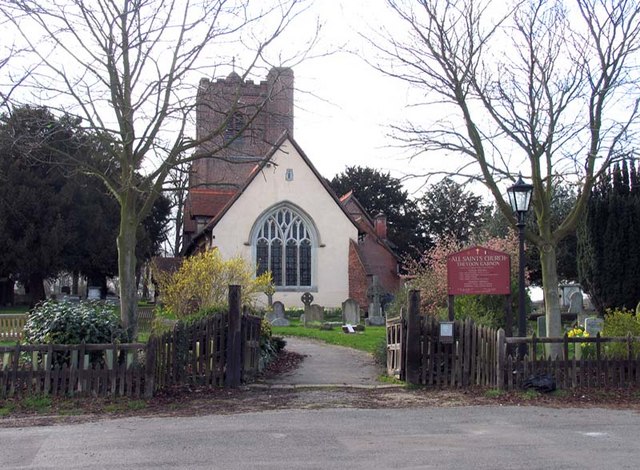

All Saints Church, Theydon Garnon: Image: John Salmon, Wikipedia

My guess is that Thomas's task of helping unveil a memorial that included the name of his son was sad but not unusual:
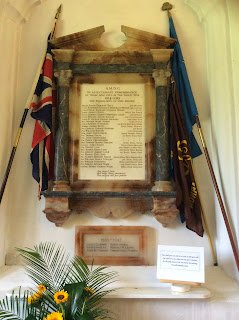


Image: Blackmore Area Local History, http://blackmorehistory.blogspot.co.uk/2008/10/theydon-garnon-war-memorial.html

A website describes the scene that day:


A memorial tablet was unveiled at the parish church of Theydon Garnon on Sunday 11th April 1920. Mr F.A. Murray read the prayers of dedication as the tablet, covered by the Union Flag, was unveiled by Mr S. Chisenhale-Marsh, JP,CA, who had lost a son during the war. He was assisted by the Revd W.P. Rowley and church warden T. Edgar, who had themselves lost sons in the war. The tablet was inscribed
In affectionate memory of those who fell in the Great War 1914-19, the Parish sets up this record[23]


But Thomas and Harriet were luckier than some other parents: although they lost Thomas John, their youngest child, three of their sons returned.


[1] http://warmemscot.s4.bizhat.com/warmemscot-ptopic8261.html; https://greatwarlondon.wordpress.com/2014/11/23/cambrai-and-the-bells-of-st-pauls/
[2] Suffolk Baptism Index, Part 3, Transcription at http://search.findmypast.co.uk/record?id=gbprs%2fb%2f220046802%2f1
[3] http://www.essexregiment.co.uk/1stessexsulva.html
[4] http://www.essexregiment.co.uk/1stessexsomme1916.html
[5] E.g. http://www.webmatters.net/france/ww1_cambrai_btl_05.htm
[6] https://books.google.co.uk/books?id=l7S_BAAAQBAJ&pg=PT155&lpg=PT155&dq=collapsed+bridge+at+masnieres&source=bl&ots=CTwMbax1bb&sig=-23ezWoahGjGk5xFaa2kdAAeFls&hl=en&sa=X&ved=0ahUKEwifyK_RmvDNAhUjDsAKHaTjCUUQ6AEIHjAA#v=onepage&q=collapsed%20bridge%20at%20masnieres&f=false
[7] https://books.google.co.uk/books?id=l7S_BAAAQBAJ&pg=PT155&lpg=PT155&dq=collapsed+bridge+at+masnieres&source=bl&ots=CTwMbax1bb&sig=-23ezWoahGjGk5xFaa2kdAAeFls&hl=en&sa=X&ved=0ahUKEwifyK_RmvDNAhUjDsAKHaTjCUUQ6AEIHjAA#v=onepage&q=collapsed%20bridge%20at%20masnieres&f=false
[8] http://www.webmatters.net/france/ww1_cambrai_btl_05.htm
[9]https://books.google.co.uk/books?id=10ZDuuel3OsC&pg=PA48&lpg=PA48&dq=collapsed+bridge+at+masnieres&source=bl&ots=l8qfxQ71-G&sig=_yz-6BZG12e1TTshjRUfVjEiueE&hl=en&sa=X&ved=0ahUKEwifyK_RmvDNAhUjDsAKHaTjCUUQ6AEIJDAC#v=onepage&q=collapsed%20bridge%20at%20masnieres&f=false
[10] http://www.rnfldr.ca/history.aspx?item=149
[11] http://www.webmatters.net/france/ww1_cambrai_btl_01.htm
[12] Another source gives 6.20: http://www.rnr.therooms.ca/part2_the_battle_of_cambrai.asp
[13] https://books.google.co.uk/books?id=VXa-BAAAQBAJ&pg=PA308&lpg=PA308&dq=battle+of+cambrai+worcestershire+marcoing&source=bl&ots=8HQ0p-R_lh&sig=ElD9qeqWfx9mCcYbtH_Tgl26Gvw&hl=en&sa=X&ved=0ahUKEwjFj92L1u7NAhVEWT4KHesgBfMQ6AEIMDAD#v=onepage&q=battle%20of%20cambrai%20worcestershire%20marcoing&f=false
[14] http://ewhurstfallen.co.uk/Men%20WW1/Howick%20Frederick/Frederick%20A%20Howick.htm
[15]https://books.google.co.uk/books?id=10ZDuuel3OsC&pg=PA48&lpg=PA48&dq=collapsed+bridge+at+masnieres&source=bl&ots=l8qfxQ71-G&sig=_yz-6BZG12e1TTshjRUfVjEiueE&hl=en&sa=X&ved=0ahUKEwifyK_RmvDNAhUjDsAKHaTjCUUQ6AEIJDAC#v=onepage&q=collapsed%20bridge%20at%20masnieres&f=false
[16] http://www.lightbobs.com/1917-cambrai-november-december.html
[17] https://books.google.co.uk/books?id=VxS-BAAAQBAJ&pg=PA211&lpg=PA211&dq=vacquerie+valley&source=bl&ots=EZL-fwEujH&sig=_wVDHaC1-v27dtJTS9g4F_iIJOQ&hl=en&sa=X&ved=0ahUKEwjHssWJs_DNAhVILMAKHX8xAhwQ6AEIJDAB#v=onepage&q=vacquerie%20valley&f=false
[18]https://books.google.co.uk/books?id=l7S_BAAAQBAJ&pg=PT155&lpg=PT155&dq=collapsed+bridge+at+masnieres&source=bl&ots=CTwMbax1bb&sig=-23ezWoahGjGk5xFaa2kdAAeFls&hl=en&sa=X&ved=0ahUKEwifyK_RmvDNAhUjDsAKHaTjCUUQ6AEIHjAA#v=onepage&q=collapsed%20bridge%20at%20masnieres&f=false
[19] http://ewhurstfallen.co.uk/Men%20WW1/Howick%20Frederick/Frederick%20A%20Howick.htm
[20] https://www.twgpp.org/photograph/view/3196315
[21] http://interactive.ancestry.co.uk/60506/42511_6129999_0114-00118?pid=200708&backurl=http://search.ancestry.co.uk//cgi-bin/sse.dll?indiv%3D1%26db%3DUKArmyRegistersEffects%26h%3D200708%26tid%3D%26pid%3D%26usePUB%3Dtrue%26_phsrc%3DDAg210%26_phstart%3DsuccessSource%26usePUBJs%3Dtrue%26rhSource%3D1543&treeid=&personid=&hintid=&usePUB=true&_phsrc=DAg210&_phstart=successSource&usePUBJs=true
[22] http://interactive.ancestry.co.uk/1904/31874_222834-00164?pid=1451030&backurl=http://search.ancestry.co.uk//cgi-bin/sse.dll?indiv%3D1%26db%3DUKProbateCal%26h%3D1451030%26tid%3D%26pid%3D%26usePUB%3Dtrue%26_phsrc%3DDAg210%26_phstart%3DsuccessSource%26usePUBJs%3Dtrue%26rhSource%3D1543&treeid=&personid=&hintid=&usePUB=true&_phsrc=DAg210&_phstart=successSource&usePUBJs=true
[23] http://www.hellfirecorner.co.uk/duffell2.htm


Monday, 11 July 2016

Thomas and Harriet's Children (3): Alice Louise Edgar

In the late nineteenth century the British Empire reached more or less its greatest extent, and imperial sentiment was stronger than it's ever been before or since.

Queen Victoria by Bassano.jpg
Victoria in 1882: By Alexander Bassano - Scanned from the book The National Portrait Gallery History of the Kings and Queens of England by David Williamson, ISBN 1855142287, p. 153., Public Domain, https://commons.wikimedia.org/w/index.php?curid=6640482

The multitudinous territories ruled over by Victoria - Queen of Britain and Empress of India - were to become important in the lives of even a backwater family like the Edgars of Preston St Mary.


The Empire at its peak -1921: By Vadac. - Own work., Public Domain, https://commons.wikimedia.org/w/index.php?curid=1436172

Alice Louise Edgar was born on 12 September 1876 - the year before Disraeli persuaded Victoria that she was in fact Empress of a country she'd never been anywhere near - at Preston, and probably at Down Hall Farm, the property rented by her father Thomas. But by the time the 1881 Census came around Thomas had lost the farm and was now a bailiff in Stonham Aspall:

From: Stonham Aspal, Suffolk, UK To: Preston St Mary, Suffolk, UK

Alice Louise was 4 and still living with her parents - her older brother Arthur had been sent to his maternal grandparents, perhaps as an economy measure.

By the time she started school the family had moved again, twice in fact - by now Thomas was finding it hard to win secure employment, and gradually slipping down the social scale. Alice Louise and her younger brother - my grandfather - Herbert entered Worlingworth C of E Voluntary Controlled Primary School on Oct 20 1884:

From: Worlingworth, Suffolk, UK To: Preston St Mary, Suffolk, UK


For the next 20 years her life was like that of many girls from struggling rural families: she left school young and entered domestic service. The  1891 Census has Alice Edgar a general servant, born in Preston, aged 14, and now living at Woodbridge, about a dozen miles from the Suffolk coast:

Map from Royal Worlington & Newmarket Golf Club, Links Close, Bury Saint Edmunds, Worlington IP28 8SD, United Kingdom to Woodbridge, Suffolk, UK

The head of the household is William J. Webb, who's described as 'living on his own means'. He has a wife, Anna, and there are three children living at home, although two are grown-up and working.

Woodbridge1.jpeg
Woodbridge Harbour: By Bluewave - the English language Wikipedia (log), Public Domain, https://commons.wikimedia.org/w/index.php?curid=6842612

Ten years later she's gone up in the world, if only a little. The 1901 Census finds her still described as a servant, but now specifically a 'nurse domestic' in the household of Richard Wilkinson, a mercantile clerk, and his wife Elizabeth. They're living in a house called Gwynethorpe at 186 Acacia Grove in New Malden, Surrey - so she's moved away from the eastern counties as well. She's looking after a daughter Dorothy (3) and a son Richard (1), but as she was the family's only servant she was probably kept busy with household tasks as well.

She probably didn't suspect that four years later her world was going to change.

View from Dolphin's Nose, A Tourist Spot in Coonor: By Sandip Bhattacharya - Dolphin's Nose View of Catherine Falls at Flickr([1]), CC BY 2.0, https://commons.wikimedia.org/w/index.php?curid=32926014

On November 11, 1905 Alice Louise, who was not much under 30 and therefore most likely considered a permanent 'spinster'  by the standards of the time, married Donald Smith Ollenbach. The transcript of the wedding certificate gives her age as 28 and describes her as a  nursery governess. Her husband was an assistant surgeon and he was aged 46.[1] The couple were married in the Coonor Schoolroom, by William Mallis, the pastor of the Union Church, Coonor, a hill station in a tea growing area of the south Indian state of Tamil Nadu. The church had only been constituted on May 26, 1905 (it's still there - for a photo see http://www.unionchurchcoonoor.com/?page_id=23)

Alice was now in a different world - and things had moved fast: when Donald Smith Ollenbach came to England a year or two earlier his first wife had accompanied him, so in two and a half years he must have sailed from New Zealand or India to the UK, met, fell for, wooed and won Alice - and to finish the process speedily arranged a divorce. At least that's what I think happened: Wilfred 'Bay' Edgar told me in a letter that his aunt Alice Louise went to India and met Ollenbach there. In due course I shall present one small but compelling piece of evidence - a line through a name on a ship's manifest - that convinces me otherwise.

Donald Ollenbach was born on November 22, 1858 at Dinapore, a garrison town about 500km north-west of Calcutta.[2] It seems likely that his father was in or at least attached to the British army, and if so, he was probably caught up in the bloody events of the Indian Rebellion (formerly known as the Indian Mutiny, May 1857-July 1858). In any case, Donald stayed in the country of his birth and in April 28, 1890 married Emma Lucretia Mill. He was an Assistant Apothecary and resident at Ishapore, a town close to Calcutta -  the location of a gun and gunpowder factory.  

OFB logo. jpg.jpg


The wedding took place at nearby Barrackpore.[3] His bride had been born on 25 February 1871 at Roorkee in Bengal.[4] She was baptised on 4 December 1872 in Cawnpore, the site of a siege and massacre during the rebellion.[5] 

On April 8, 1893,while still an army apothecary and living at Ishapore, he became a Freemason - he was initiated into the United Grand Lodge of England at Barrackpore. A note says he resigned on January 1, 1903, possibly because he'd joined a lodge in another country. 

Around the turn of the century he had left India, possibly for the first time.

On November 17 1902, now an assistant surgeon, Ollenbach resumed his 'career' in Freemasonry by entering the United Grand Lodge of England in Wellington, New Zealand, where he was living.[6] He was still there in the first quarter of 1903. A note says he resigned, possibly at the very end of 1911, but as he had been away from New Zealand for almost a decade, this is of no significance. But the time of his payment to the Lodge in early 1903 gives us an approximate starting point for the hectic period which ended with his second marriage. 

In those days 'long leave' from the east could be up to six months, and at some point Ollenbach returned to England with his wife and met Alice Louise.

How they met, I don't know. There is no record of Donald having ever been to England before, but there were Ollenbachs living in London and even in Surrey - we last met Alice Louise working as a nurse in that county, and perhaps she had left the Wilkinsons for a relative of the man she was about to meet.

That, though, is speculation. But what happened next can be deduced from the evidence of a passenger manifest. 'Ollenbach Surg.' left London for Bombay on the Marmora under Captain G. L. Langbonie sometime in the summer of  1904[7] (The manifest was stamped July 7) Mrs Ollenbach's name is on the passenger list but it's been crossed out.[8] I can find no trace of Emma Lucretia Ollenbach (neé  Mill) after that final sad appearance in the record. She married at the age of 19 and she was losing her husband and the life she'd had.

Alice Louise didn't sail with her future husband on the Marmora but she must have followed not too long after - as we've seen, the marriage took place in November 1905. A daughter, Gladys, as born in either 1910 or 1912, depending which ship's manifest is accurate - my hunch is it's 1910, because, as we will see, her age had a tendency to fall as the years went by.

Meanwhile, Ollenbach was working his way slowly up the army medical hierarchy. He was commissioned as an officer on June 7, 1907 while working at the Cordite factory Aruvakandu, Tamil Nadu.[9]


 Aruvankadu railway station
Aravakundu Railway Station: By Sayowais - Own work, CC BY-SA 3.0, https://commons.wikimedia.org/w/index.php?curid=31588552

Two speculations: given there was also a munitions factory at Ishapore, my guess is that he specialised at first in treating and then in operating on the victims of explosions and other accidents. And as Coonor is 6 km from Aravakundu, I think he was already working there when he brought Alice Louise to the Union Church to be married.

In any case, this was Alice Louise's new world, one very different to the flat eastern counties of her English childhood:

Tea Estate in Coonor: By Titus John - Own work, CC BY-SA 4.0, https://commons.wikimedia.org/w/index.php?curid=46388524

In October 1907 Ollenbach was made Assistant Surgeon with the honorary rank of Lieutenant. He was pensioned off on 22 November 1914 as an Honorary Captain.[11] At the time he was a Senior Assistant Surgeon and  Honorary Major, so presumably he continued as a kind of medical reservist with a lower rank.[12] [13] Perhaps WW1 meant that his services were needed because in 1918 he was promoted from the Honorary Rank of Captain to the Honorary Rank of Major.[14] Nothing more is heard of him thereafter, so perhaps he was allowed to enjoy his retirement.

However, there is another possibility. As we shall see, he died in Calcutta, and it seems likely that he took his family up north at some time after his retirement. This is what Wilfred  Edgar has to tell us about him:

Alice...married the senior scientist Dr. Ollenbach on the poppy fields (we were manufacturing opium then) when we ceased he became the medical officer for Calcutta.

Everything I've found about Ollenbach points to a military career not a scientific one, but it's possible that after he left the army he worked in Calcutta and even that he had links to opium, production of which continued into WW11, although efforts were made to run-down the industry in the first decade of the twentieth century. But I must stress that there is no documented evidence as to any activity at all after 1918. And while I'm on the subject, there's an 1894 reference to a Mr. J. (L.) Ollenbach who was the laboratory superintendent at the opium factory in Patna (Bihar state). This might suggest a family connection to opium and possible involvement on Donald's part, or it might point to why there was a mistaken belief of such involvement.

The next thing we know for certain is that Donald Ollenbach died on December 8, 1932 in Calcutta and was buried the next day.[15]

It seems that in the wake of her husband's death, Alice Louise contemplated moving back home with her daughter. This might also have had something to do with the death of A. J. Ollenbach in Calcutta on April 14, 1934. This Ollenbach was a retired magistrate in Bihar and Orissa, and he could have been her brother-in-law.

We find a Mrs. A. Ollenbach, aged 50 - she was lying - accompanied by Miss J. (sic) Ollenbach aged 20, who sailed on the City of Valencia from Calcutta and arrived in London in May 1933 headed for Mount Rd.,Theydon Garnon. This is further proof the property remained in the family after her father Thomas's death in 1929. Their country of intended future residence is marked as England.

But if they really planned to build a new life in a country Gladys had never before visited, they soon changed their minds. They wouldn't have been the first to have been unable to leave behind the light, life and colour of India.

On November 10, 1934 Alice (age given as a more honest but still not quite accurate, 56, her profession as 'Nil') and Gladys (24, her profession - the 'stage') left London for Calcutta. They'd been staying at 120, Arthur Rd with Alice Louise's brother Herbert and his wife, also an Alice. They were travelling first class and their country of last permanent residence was given as England but they intended to live in India.[16]

Perhaps they made a second attempt to return to teh country that had once been home to Alice Louise.

In the spring of 1938 Alice (57) and Gladys (22 - while her mother has hardly aged at all in four years, Gladys has actually got younger) set out from Calcutta on the Dumana arriving on April 9, perhaps crossing paths with my father Thomas - Gladys's cousin - who was sailing in the opposite direction to Hong Kong. Gladys was described as a 'radio artist'. Their address in England was 69, Vansittart Road, a large Victorian semi, the new home of Herbert and Alice. [17] They gave 'England' as their country of 'intended permanent residence' but returned cabin class to India (Alice still 57 but Gladys now a mere 21) on September 24, 1938.[18]

Presumably Gladys was a stage actress who was also broadcast on the radio. This is a splendid example of the way modernity - the application of science to the questions of existence and to the production of goods and services - was changing everyone's life. We've seen it creeping up on the Edgars in the nineteenth century, for example in the coming of the railways, but now its here in full force and raging uncontrollably. The mother is born on a farm in the quiet corner of Suffolk her ancestors had inhabited for the previous 700 years. The family's economic position is destroyed and she ends up in domestic service, at that time the fate of the majority of British women of her class. But the daughter knows nothing of this, and after what was probably a childhood of great material comfort has her voice broadcast over the airwaves of a country that to her grandfather, the third Johnson Edgar, would have seemed as distant as the moon.

And if Johnson was somehow managing to keep an eye on events he had yet another surprise in store. 

Gladys Helen Ollenbach married Dow Jehangir Minwalla in Darjeeling in 1942, both ages given as 27.[19]  His name probably means he was a Zoroastrian (also known as Parsee/Parsi), although it's just possible he was the child of a Muslim-Parsee union.

Parsi Wedding, 1905: By The original uploader was Ravichandar84 at English Wikipedia - Public Domain, https://commons.wikimedia.org/w/index.php?curid=6958854

Darjeeling is a wonderful city and we were lucky enough to be there for the celebration of the birthday of the Buddha:


But I wish I had known about this part of our family history, as I'd have visited the abandoned Parsee Cemetery and tried to track down other traces of a now largely vanished community!

Zoroastrianism - which originated in Iran - is monotheistic and possibly the oldest 'revealed' religion in the world. The adherent best-known to British people is the late rock star Freddy Mercury. The popular Channel 4 series Indian Summers ended with a wedding between a woman of English ethnicity and a Zorastrian man, symbolising a partial reconciliation between the 'races' and the other factions that were at war throughout the series.

The marriage of my aunt Gladys opens up the intriguing possibility that I have cousins who lived through the tumultuous events of Indian independence and the forging of a new nation.

The national flag of India hoisted on a wall adorned with domes and minarets.
The National Flag of India flies above the Red Fort in Delhi: By Dennis Jarvis from Halifax, Canada - India-0037, CC BY-SA 2.0, https://commons.wikimedia.org/w/index.php?curid=26156928


[1] http://search.findmypast.co.uk/record?id=bl%2fbind%2fn-11-10b%2f00544&parentid=bl%2fbind%2fm%2f235982%2f1&highlights=%22%22
[2] http://search.ancestry.co.uk/cgi-bin/sse.dll?_phsrc=DAg122&_phstart=successSource&usePUBJs=true&gss=angs-g&new=1&rank=1&gsfn=Donald%20Smith&gsfn_x=NN&gsln=Ollenbach&gsln_x=0&msbdy_x=1&msbdp=5&MSAV=1&msbdy=1858&cp=0&catbucket=rtp&uidh=eje&pcat=ROOT_CATEGORY&h=934891&db=FS1IndiaBirthsandBaptisms&indiv=1&ml_rpos=2
[3]http://search.findmypast.co.uk/record?id=bl%2fbind%2f005137430%2f00229&parentid=bl%2fbind%2fm%2f76470%2f1&highlights=%22%22
[4] http://search.ancestry.co.uk/cgi-bin/sse.dll?_phsrc=DAg124&_phstart=successSource&usePUBJs=true&gss=angs-g&new=1&rank=1&gsfn=Emma%20Lucretia&gsfn_x=NN&gsln=Mill&gsln_x=0&msypn__ftp=India&msypn=5112&msypn_PInfo=3-%7C0%7C1652396%7C0%7C5112%7C0%7C0%7C0%7C0%7C0%7C0%7C0%7C&MSAV=1&cp=0&catbucket=rtp&uidh=eje&pcat=ROOT_CATEGORY&h=37536&db=FS1IndiaBirthsandBaptisms&indiv=1&ml_rpos=4
[5] http://search.ancestry.co.uk/cgi-bin/sse.dll?_phsrc=DAg125&_phstart=successSource&usePUBJs=true&gss=angs-g&new=1&rank=1&gsfn=Emma%20Lucretia&gsfn_x=NN&gsln=Mill&gsln_x=0&msypn__ftp=India&msypn=5112&msypn_PInfo=3-%7C0%7C1652396%7C0%7C5112%7C0%7C0%7C0%7C0%7C0%7C0%7C0%7C&MSAV=1&cp=0&catbucket=rtp&uidh=eje&pcat=ROOT_CATEGORY&h=1531183&db=FS1IndiaBirthsandBaptisms&indiv=1&ml_rpos=7
[6] http://search.ancestry.co.uk/cgi-bin/sse.dll?_phsrc=DAg105&_phstart=successSource&usePUBJs=true&gss=angs-g&new=1&rank=1&msT=1&gsfn=Donald%20&gsfn_x=0&gsln=Ollenbach&gsln_x=0&MSAV=1&cp=0&catbucket=rtp&uidh=eje&pcat=ROOT_CATEGORY&h=832625&recoff=5%207&db=UKFreemasonRegisters&indiv=1&ml_rpos=1
[7] http://search.findmypast.co.uk/record?id=tna%2fbt27%2f0441000137%2f00009
[8] http://search.findmypast.co.uk/record?id=tna%2fbt27%2f0441%2f00%2f0137%2fp%2f0001f&parentid=tna%2fbt27%2f0441000137%2f00009&highlights=%22%22
[9] http://search.ancestry.co.uk/cgi-bin/sse.dll?_phsrc=DAg107&_phstart=successSource&usePUBJs=true&gss=angs-g&new=1&rank=1&msT=1&gsfn=Donald%20&gsfn_x=0&gsln=Ollenbach&gsln_x=0&MSAV=1&cp=0&catbucket=rtp&uidh=eje&pcat=ROOT_CATEGORY&h=23449&db=indarqu1912&indiv=1&ml_rpos=3
[10] https://www.thegazette.co.uk/London/issue/28066/page/6671/data.pdf
[11] http://search.findmypast.co.uk/record?id=bl%2fbind%2fl-ag-26-15wo%2f6902
[12] https://books.google.co.uk/books?id=j1i-BAAAQBAJ&pg=PA98-IA10&lpg=PA98-IA10&dq=donald+smith+ollenbach&source=bl&ots=wXHXqD0E3y&sig=hYKWvgDx_YHqktUN0OBC0BVCFTE&hl=en&sa=X&sqi=2&ved=0CC8Q6AEwA2oVChMIwf2vpt39xgIVLFrbCh3DaAeX#v=onepage&q=donald%20smith%20ollenbach&f=false
[13] https://www.jstor.org/stable/25309269?seq=1#page_scan_tab_contents
[14] https://www.thegazette.co.uk/London/issue/31239/page/3639/data.pdf
[15] http://search.ancestry.co.uk/cgi-bin/sse.dll?_phsrc=DAg118&_phstart=successSource&usePUBJs=true&gss=angs-g&new=1&rank=1&gsfn=Donald&gsfn_x=0&gsln=Ollenbach&gsln_x=0&msypn__ftp=Calcutta,%20West%20Bengal,%20India&msypn=743003&msypn_PInfo=8-%7C0%7C1652396%7C0%7C5112%7C0%7C30470%7C0%7C0%7C743003%7C0%7C0%7C&MSAV=1&cp=0&catbucket=rtp&uidh=eje&pcat=ROOT_CATEGORY&h=387831&db=FS1IndiaDeathsandBurials&indiv=1&ml_rpos=4
[16] http://interactive.ancestry.co.uk/2997/41039_b001400-00052?pid=146251319&backurl=http://search.ancestry.co.uk//cgi-bin/sse.dll?_phsrc%3DDAg115%26_phstart%3DsuccessSource%26usePUBJs%3Dtrue%26gss%3Dangsg%26new%3D1%26rank%3D1%26msT%3D1%26gsfn%3DAlice%26gsfn_x%3D0%26gsln%3DOllenbach%26gsln_x%3D0%26MSAV%3D1%26cp%3D0%26catbucket%3Drtp%26uidh%3Deje%26pcat%3DROOT_CATEGORY%26h%3D146251319%26recoff%3D6%25207%26db%3DUKOutwardPassengerLists%26indiv%3D1%26ml_rpos%3D1&treeid=&personid=&hintid=&usePUB=true&_phsrc=DAg115&_phstart=successSource&usePUBJs=true
[17] http://interactive.ancestry.co.uk/1518/30807_A001152-00548?pid=29009837&backurl=http%3a%2f%2fsearch.ancestry.co.uk%2f%2fcgi-bin%2fsse.dll%3fgss%3dangs-g%26new%3d1%26rank%3d1%26gsfn%3dAlice%2bLouise%26gsln%3dOllenbach%26msbdy_x%3d1%26msbdp%3d5%26MSAV%3d0%26msbdy%3d1876%26cp%3d0%26catbucket%3drstp%26uidh%3deje%26pcat%3dROOT_CATEGORY%26h%3d29009837%26db%3dBT26%26indiv%3d1%26ml_rpos%3d2&treeid=&personid=&hintid=&usePUB=true
[18] http://interactive.ancestry.co.uk/2997/41039_b001515-00395?pid=146433350&backurl=http%3a%2f%2fsearch.ancestry.co.uk%2f%2fcgi-bin%2fsse.dll%3fgss%3dangs-g%26new%3d1%26rank%3d1%26gsfn%3dGladys%2bHelen%26gsln%3dOllenbach%26mswpn__ftp%3dCalcutta%252c%2bWest%2bBengal%252c%2bIndia%26mswpn%3d743003%26mswpn_PInfo%3d8-%257c0%257c1652396%257c0%257c5112%257c0%257c30470%257c0%257c0%257c743003%257c0%257c%26msbdy_x%3d1%26msbdp%3d10%26MSAV%3d0%26msbdy%3d1910%26cp%3d0%26catbucket%3drstp%26uidh%3deje%26pcat%3dROOT_CATEGORY%26h%3d146433350%26recoff%3d6%2b7%2b30%26db%3dUKOutwardPassengerLists%26indiv%3d1%26ml_rpos%3d3&treeid=&personid=&hintid=&usePUB=true
[19] http://search.findmypast.co.uk/record?id=bl%2fbind%2fm%2f218383%2f2

Saturday, 9 July 2016

Thomas and Harriet's Children (2): Wilfred Henry Edgar

According to Wilfred 'Bay' Edgar, his uncle Wilfred had a colourful life:

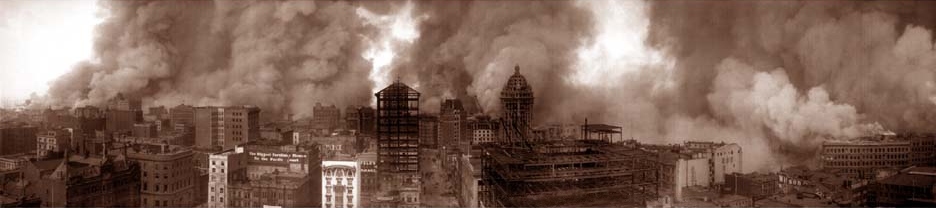
(He) emigrated to America and was believed killed in the San Francisco earthquake (but) he later re-appeared in Australia....

By Pillsbury Picture Co. - Panoramic photographs, Library of Congress, Reproduction Number: LC-USZ62-130410, Public Domain, https://commons.wikimedia.org/w/index.php?curid=169394 

That earthquake was in 1906 and documentary evidence makes this story unlikely.

Wilfred Henry Edgar was born in Tendring Essex, about seven miles from Clacton. His birth was registered in the July-September quarter of 1888 - I have a note that says he was actually born on May 28, but that was based on a record in Find My Past, and I don't have that subscription at the moment.

From: Tendring District, Essex, UK To: Clacton-on-Sea, Essex, UK

In 1901 he was living with his family in Stapleford Abbots, Ongar, Essex and is described as a 'scholar' aged 12.

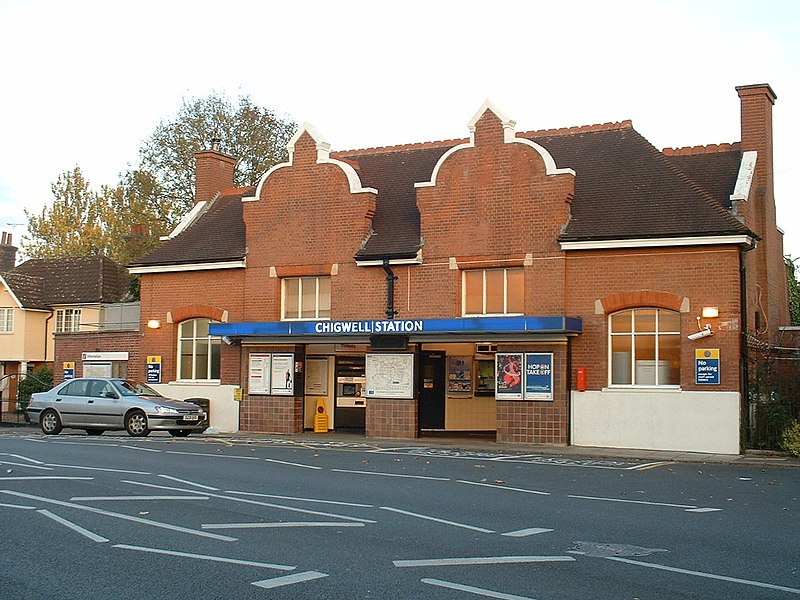
Wilfred joined the Essex Militia as a reservist in 1904 and his Attestation form has him working as a gardener for a Mr. Webb of Romford and living at Chigwell, four miles from Stapleford Abbots. 

Chigwell Station, opened 1903
By Sunil060902 - Own work, CC BY-SA 3.0, https://commons.wikimedia.org/w/index.php?curid=3105725

As Wilfred hadn't been in the regular army, he was most likely in the Special Reserve:

This was a form of part-time soldiering, in some ways similar to the Territorial Force. Men would enlist into the Special Reserve for 6 years and had to accept the possibility of being called up in the event of a general mobilisation and otherwise undertake all the same conditions as men of the Army Reserve. Their period as a Special Reservist started with six months full-time training (paid the same as a regular) and they had 3-4 weeks training per year thereafter. A man who had not served as a regular could extend his SR service by up to four years but could not serve beyond the age of 40.[1]

The 1911 Census - the last to be currently available - has Thomas, Harriet, Wilfred and Thomas Jr. listed in the household of Horace S. Palmer, a 22 year old farmer of Stewarts Farm, Toot Hill, Ongar, Stanford RiversEssex. This was Thomas and Harriet's low point, as they had fallen to the status of domestic servants, and they most likely feared they might end in the workhouse if one or both became too old or sick to work. Wilfred is described as a 'Reservist' which suggests he didn't have a full-time income and explains why he was living with his parents, perhaps in return for informal services on the farm.

From: Stapleford Abbotts Golf Club, Horsemanside, Tysea Hill, Stapleford Abbotts, Romford RM4 1JU, United Kingdom To: Stanford Rivers, Essex, UK

But all this means that Wilfred was in Romford two years before the San Francisco earthquake and back with his family in another part of Essex five years after it. He was still a reservist in the Militia in 1911 and my guess is that his service was unbroken by time spent in California, although this is not, of course, certain. He was single at that time and I can find no record of his ever having married.

Wilfred - like his brothers Thomas and Herbert, the subject of future posts - served in the First World War. The Special Reservists were called up in early August 1914 and Wilfred went at first to the Royal Field Artillery. He was  moved to the Royal Horse Artillery, where he worked as a driver (Number 34472, the same as in the RFA), and entered the Western Front (France and Flanders) on March 30, 1915:

The RHA provided light, mobile guns giving firepower in support of the cavalry. It was the senior arm of the artillery.[2]

His service qualified him for the Victory, British and Star medals - but that tells us nothing more, as all three would have been awarded to anyone who had fought the Central Powers in 1914 and 1915.

Bay's memories of his uncles and aunts, although not accurate in every detail, are generally soundly based in fact - so is there any evidence of Wilfred ending up in Australia?

Well, W. H. Edgar, a garage proprietor, aged 43, of 4, Clarence Gardens, Hampstead, sailed on the Otranto (Orient Line) to Melbourne on September 1, 1934, intending to make Australia his permanent residence.  The age is about 3 years out, but he could well have decided to pass as a little younger in the new jobs market.

So this might or might not be my great uncle Wilfred, but, in any case, I've not been able to find any further trace of him in the record.


[1] http://www.longlongtrail.co.uk/soldiers/a-soldiers-life-1914-1918/enlisting-into-the-army/british-army-reserves-and-reservists/
[2] https://www.forces-war-records.co.uk/units/4670/royal-horse-and-field-artillery

Tuesday, 5 July 2016

Thomas and Harriet's Children (1): Katie Mary Edgar

My great aunt Katie Mary Edgar was born in Suffolk where our family had lived for at least 700 years. But hard times had already fallen upon her father,Thomas,who had been forced to stop renting the family farm and work as a bailiff. Like everyone else her life was touched by the tumultuous events of the twentieth century.

She was born on  March 11, 1881, probably at Stonham Aspel where she was baptised on April 10 and where her father was working. 

From: Stonham Aspal, Suffolk, UK To: Preston St Mary, Suffolk, UK


The 1881 Census shows Katie as three weeks old.[1] But by now Thomas was struggling economically and the family had to keep moving as he tried to stay in work. She began her education in Clacton, when her family were living at Tendring 8.5 miles away, and entered Wetherden County Primary School on November 4, 1889.[2]

From: Wetherden, Suffolk, UK To: Stowmarket, Suffolk, UK

The 1901 Census has her living with her parents at Stapleford Abbots. She's the oldest of 6 children living at home; under occupation 'postman' has been crossed out and rightly re-assigned to her brother Stanley. No alternative job is given, but it's unlikely that as the oldest child in a impoverished family she was doing nothing.

It's not certain what happened to her in the next ten years.

The 1911 Census has Katie Mary Edgar, a 27 year old shop assistant working at home in the bakery and confectionery trade, born at Milden and living in Woodford, West Ham. She's down as 'boarder' but 'Head' is hand-written next to her. The lodger is 86 year old widow Susan Porter.

Is this 'our' Katie Mary Edgar?

If so, the age is wrong by about three years, but that's not a huge problem as census ages are often inaccurate.  But Milden is not part of Bosmere district where Katie's birth was registered and it is 17 miles from Stonham Aspal so the name might be a coincidence. But there is no sign of a different Katie Mary Edgar born in 1884 in the Find My Past or Ancestry records so my guess is that it is our relative.

Woodford is only 8.5 miles from Epping where she married on September 1, 1913. Her father, Thomas, signed the marriage certificate, The wedding took place at All Saints, the Theydon Garnon Parish Church. Katie Mary - 'spinster' of that parish - married Joseph Harold Love, an engineer (according to Bay Edgar with Ulster shipbuilders Harland and Wolf). 

Her husband was born in Chadwell Heath, Ilford, Essex on December 14, 1886. At some point he took his engineering skills into the Merchant Navy and won a medal for his service in WW1

The Merchant Navy suffered dreadful casualties during WW11. Joseph was to be one of them:

Chief Engineer Officer SS Tewkesbury, Merchant Navy Died 5th September 1943 Age 57 Commemorated ALL SAINTS CHURCH, THEYDON GARNON Son of Joseph Thomas Love and Alice Love; husband of Katie Mary Love, of Epping. On 4th May 1941 SS Tewkesbury loaded a cargo of beef at Rosario, Argentina. and then proceeded downriver to Montevideo to pick up the rest of her cargo. She was scheduled to return to the UK via Freetown and Oban, but received a wireless message to proceed to St Vincent in the Cape Verde Islands instead. At 21.45GMT on Tuesday 21st May she was torpedoed by a German U-Boat. At the time Joseph Love was engaged in conversation with Captain Pryse on the main deck Both were thrown into the air as the torpedo struck the starboard side. Joseph landed heavily and was washed along the deck, struggling to take a hold on anything to prevent himself from being washed overboard. The order was given to abandon ship and two boats were lowered, each holding 21 occupants. Both were eventually picked up by American ships, and all but two of the men were back in the UK by the end of July. Joseph Love never returned to sea, and died from his injuries two years later.

I gratefully acknowledge http://www.roll-of-honour.com/Essex/Epping.html for this account.

He died on September 5, 1943, aged 56, and he is commemorated in All Saints Church, Theydon Garnon, where he and Katie had married thirty years before and where her father had been a churchwarden. 

Joseph Harold Love
 With thanks to Boreenatra: http://www.findagrave.com/cgi-bin/fg.cgi?page=gr&GRid=146975338&ref=acom

Katie was granted probate of £1432 10s. 11d. She herself died of stomach cancer on May 31 1953 at 1 Mount Road but living at 12, Coopersale Common - the two properties are only 1.4 miles apart.

Map from 12 Coopersale Common, Coopersale, Epping CM16 7QS, UK to 1 Mt Rd, Epping CM16 7PQ, UK


The Mount Road address had been the home of her father and mother, so it must have stayed in the family after Thomas died in 1929.  Her son Joseph Edgar Love signed the death certificate. Joseph had been born on July 2, 1914.

Apart from these bare facts, I know little about Katie. There are a number of photos on Ancestry and in one of them she's holding a small dog - that is the extent of my knowledge of her as a person!

The life of the wife of a merchant seaman must inevitably include long periods of loneliness. Katie surely experienced much additional anxiety when, soon after her marriage and the birth of their son, her husband was called to service in WW1. The second great war of the last century took him away from her for good.


[1]http://search.findmypast.co.uk/record?id=gbc%2f1881%2f4307720%2f00447&parentid=gbc%2f1881%2f0008605498&highlights=%22%22
[2] http://edgarfamilyintheworldblog.blogspot.co.uk/search?updated-min=2015-01-01T00:00:00-08:00&updated-max=2016-01-01T00:00:00-08:00&max-results=12